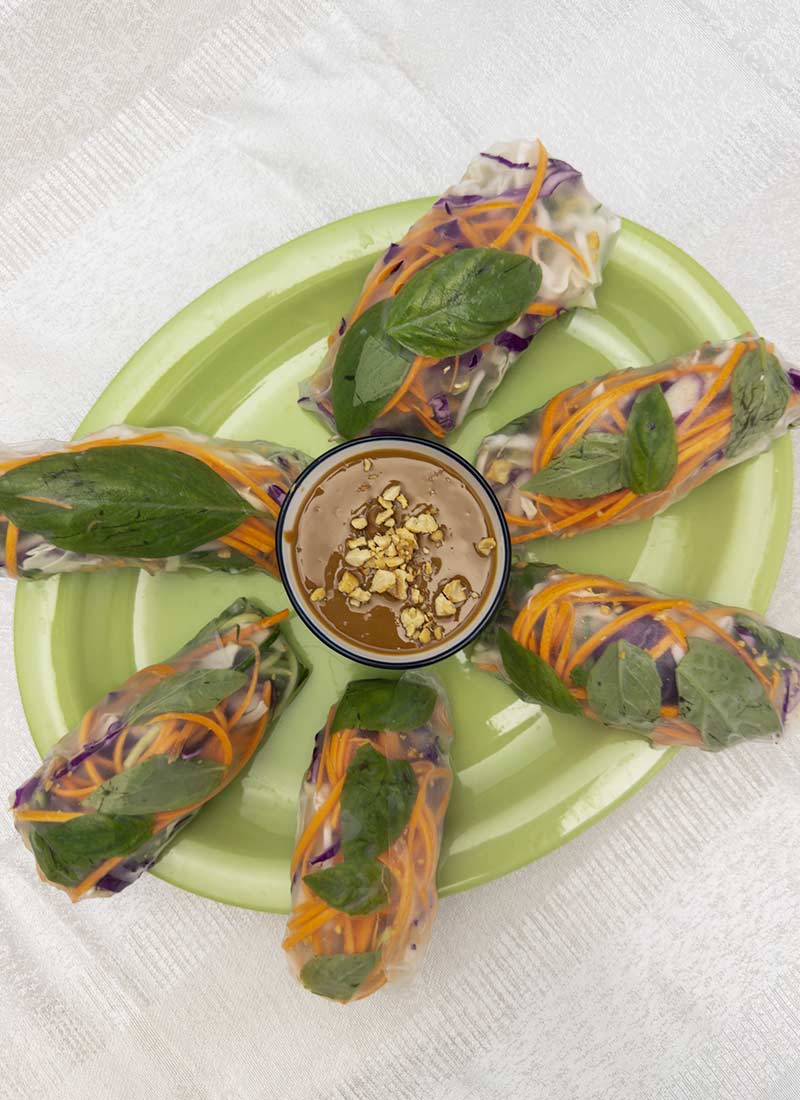
Fresh vegetables don’t often get the spotlight, but Vietnamese fresh spring rolls might just convert anyone who swears they’re not a veggie person. These light appetizers always feel refreshing and satisfying at the same time. You can fill them with crisp veggies, herbs, rice noodles, and optional protein like shrimp or chicken, and they adapt easily to any dietary preference. I usually load mine with crunchy vegetables and a creamy peanut sauce. If you want to try this fresh spring rolls recipe along with the best peanut sauce recipe for spring rolls, keep reading!
Why You’ll Love This Fresh Spring Rolls Recipe
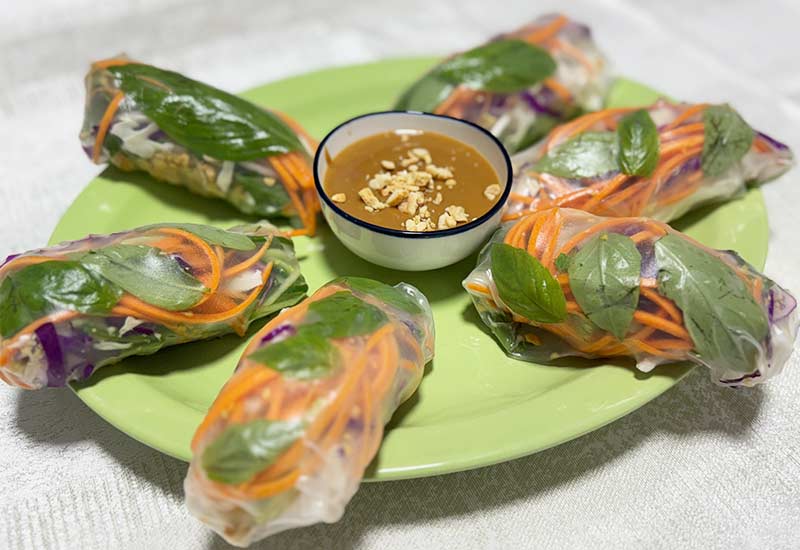
Fresh spring rolls look impressive on the plate, but they’re easier to make than most people expect. Even beginner home cooks can pull off this fresh spring rolls recipe on the first try. Since they’re served fresh instead of fried, they feel lighter and a lot healthier. I also love how customizable this vegetable spring rolls recipe is. You can mix in whatever veggies you enjoy or add protein to turn it into a shrimp roll or chicken spring rolls recipe. And of course, the sauce brings everything together. A good peanut sauce only needs the right balance of salty, sweet, and tangy. It’s perfect for days when you want a delicious appetizer without much cooking.
What You Need for This Vietnamese Spring Rolls Recipe
For the fresh spring rolls
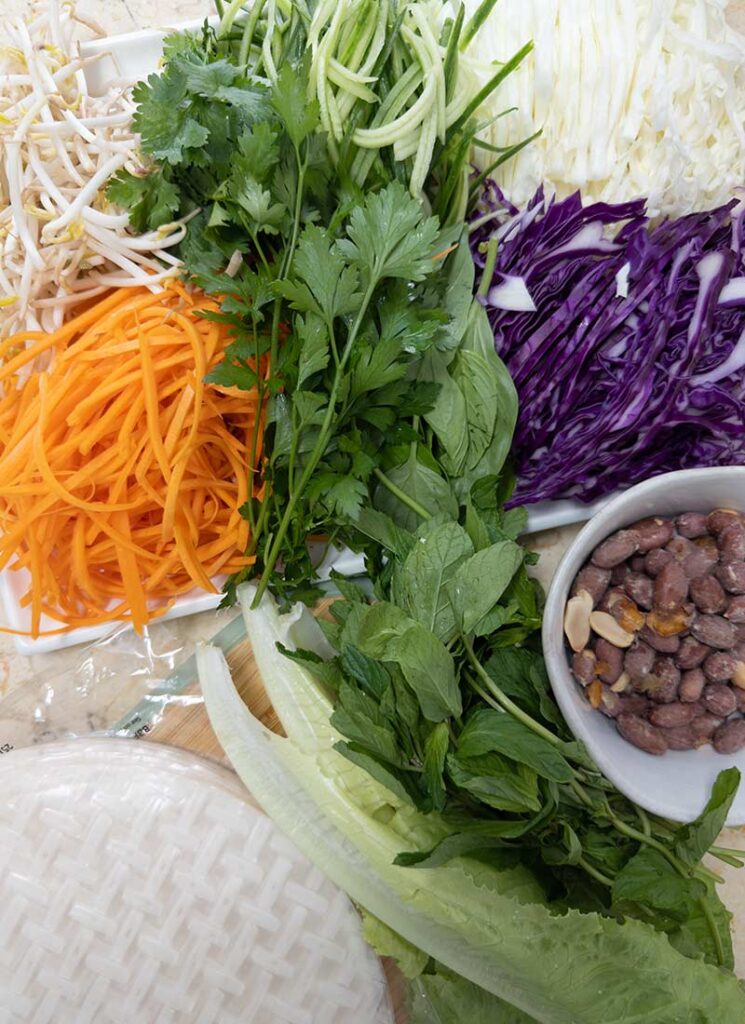
- 10 to 12 rice paper wrappers
- 1 cup shredded white cabbage
- 1 cup shredded purple cabbage
- 1 medium cucumber, julienned
- 2 medium carrots, julienned
- 1 cup mung bean sprouts
- ½ cup fresh mint leaves
- ½ cup fresh basil leaves
- ½ cup fresh coriander (cilantro)
- 6 to 8 lettuce leaves, torn into smaller pieces
- ¼ cup chopped peanuts
- 1 cooked chicken breast, thinly sliced (optional)
- 2 to 3 ounces rice vermicelli noodles (optional)
For the peanut sauce
- ½ cup smooth peanut butter
- 2 tablespoons soy sauce or tamari
- 2 tablespoons brown sugar, honey, or maple syrup
- 1 tablespoon rice vinegar or lime juice
- 1 clove garlic, finely minced
- ½ to 1 teaspoon Sriracha, to taste
- 3 to 6 tablespoons of warm water to thin
Step-by-Step Guide to Homemade Vietnamese Spring Rolls
1. Prepare the vegetables and herbs. Shred the white and purple cabbage. Julienne the cucumber and carrots. I used a julienne prep peeler to keep everything even and quick. Rinse the mung bean sprouts and pat them dry. Remove the stems from the mint, basil, and coriander. Tear the lettuce into smaller pieces.
2. Make the peanut sauce. In a small bowl, whisk together the peanut butter, soy sauce or tamari, sweetener of choice, rice vinegar or lime juice, minced garlic, and Sriracha. Add warm water little by little until the sauce turns smooth and pourable. This simple mix is the perfect peanut sauce recipe for spring rolls.
3. Set up your rolling station. Fill a shallow dish with warm water. Place a clean board or plate beside it and arrange all your fillings within reach.
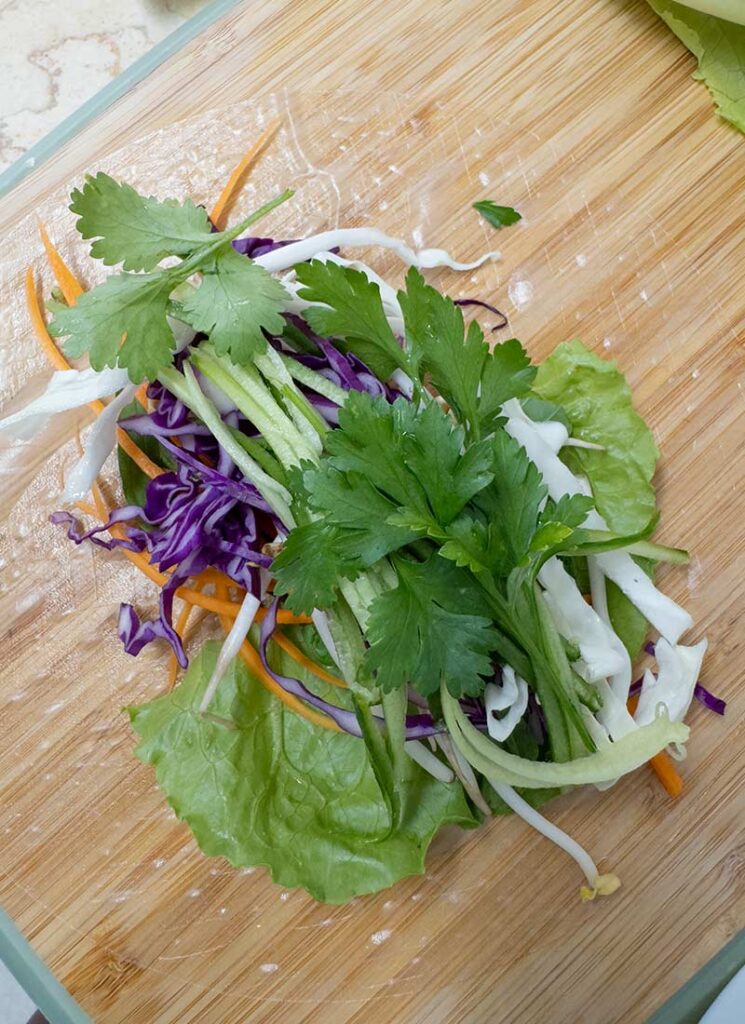
4. Soften a wrapper. Dip one rice paper wrapper into the water for a few seconds until softened, then lay it flat on your board.
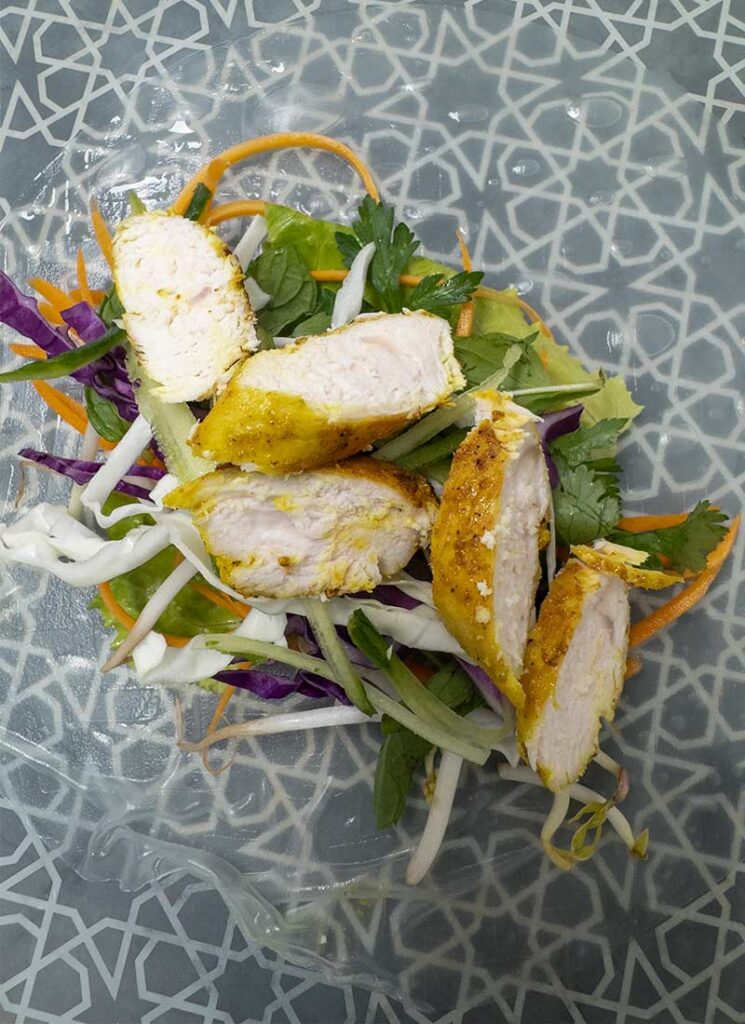
5. Assemble the filling. Start with a piece of lettuce. Add veggies, herbs, sprouts, and peanuts. Add chicken if you’re making a chicken spring rolls recipe. Add vermicelli noodles too if you want a more traditional feel.
How to prepare the chicken: Season a chicken breast with your favorite spices. Pan-fry until fully cooked, let it cool, then slice it thinly. This works great for meal prep, too. You can cook the chicken ahead and store it in an airtight container in the fridge until you’re ready to assemble.
7. Roll the spring roll. Fold the sides in, then roll from the bottom up, keeping everything snug but gentle so the wrapper doesn’t tear.
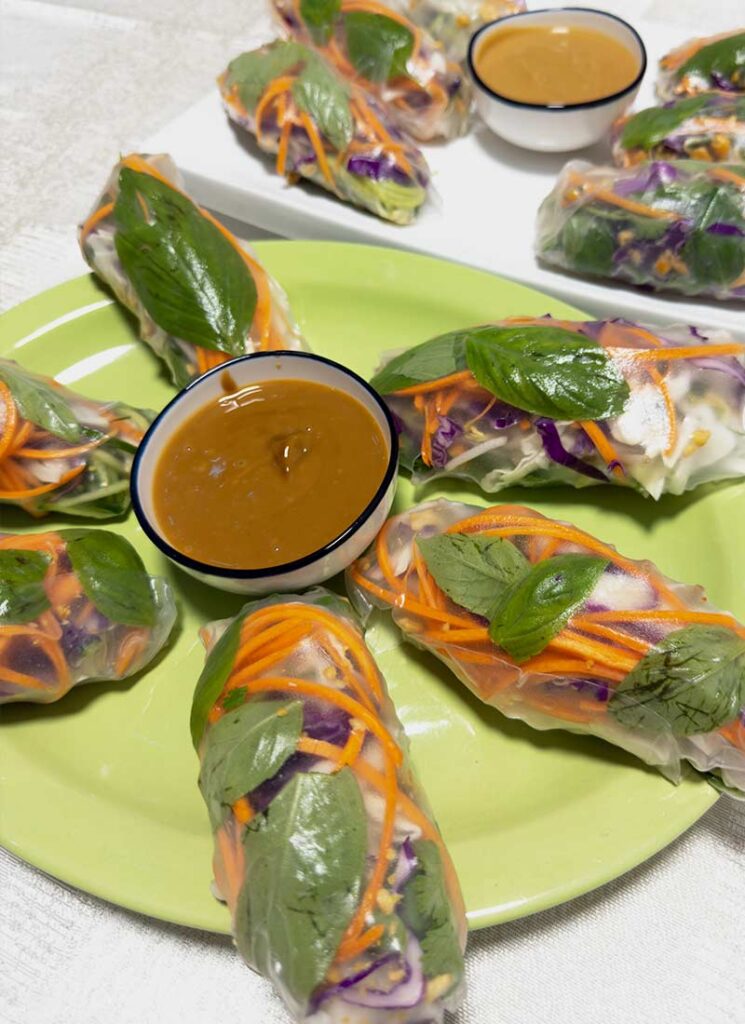
8. Continue until all wrappers are filled. Serve immediately with your peanut sauce.
Vietnamese Fresh Spring Rolls Recipe FAQs
How long can you make the spring rolls before serving?
For the best texture, it’s always best to roll these fresh right before serving. But if you want to prep ahead, you can make them a few hours in advance. Just cover them with a damp cloth at room temperature so the wrappers stay soft and don’t dry out.
What if the rice paper wrapper becomes too soft or sticky?
When dipping the rice paper, use warm water and make sure to remove it when it’s pliable but not floppy. Too much soaking can cause tearing. If you notice the wrapper sticking to the board or drying out, place a damp tea towel or cloth underneath or over the rolls.
How should I store leftover rolls and sauce?
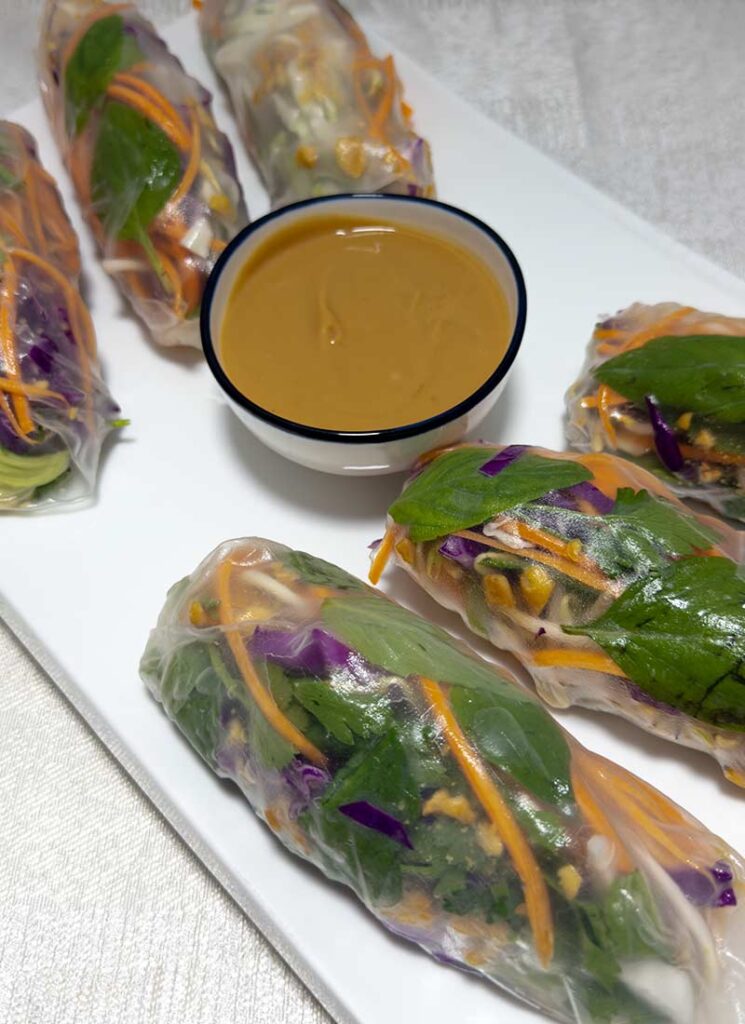
For rolls: If you must store them, wrap each roll individually in plastic wrap to prevent them from sticking together, and keep them in the refrigerator. However, the texture will change. It’s ideal to eat within a few hours. For sauce: Your peanut sauce can be stored in an airtight container in the fridge for up to two weeks. You can even freeze leftovers for longer.
Can I make this vegetarian or gluten-free?
Absolutely. You can skip the chicken (or shrimp) to go fully vegetarian and create a rich vegetable spring rolls recipe. For gluten-free, use tamari instead of soy sauce in the peanut sauce, and ensure your rice paper wrappers don’t contain wheat. Many wrappers are naturally gluten-free, but always check the label.
Why do my rolls sometimes tear or fall apart?
Usually when they rip, it’s either because there’s too much filling, the wrapper sat in water too long, or the filling is just too wet. Sometimes even the surface you’re rolling on can dry it out and make it tear. To avoid that, don’t overfill, dip the wrapper just until it softens, pat any extra-wet ingredients dry, and roll on a damp towel instead of a dry cutting board.
Pro Tips for Rolling and Serving Fresh Spring Rolls
Use two wrappers if yours tear easily.
Some brands are thinner than others. If you notice tearing even when you’re gentle, double-wrap your roll for extra strength.
Keep your hands slightly damp.
Dry hands make the rice paper stick too quickly. Lightly damp hands help you smooth the wrapper without pulling.
Prep all ingredients before you start rolling.
Having everything cut, washed, and arranged in small bowls keeps the process relaxing instead of rushed.
Keep a bowl of warm water nearby.
You’ll use this to soften each wrapper as you roll, so keep it close to your work area.
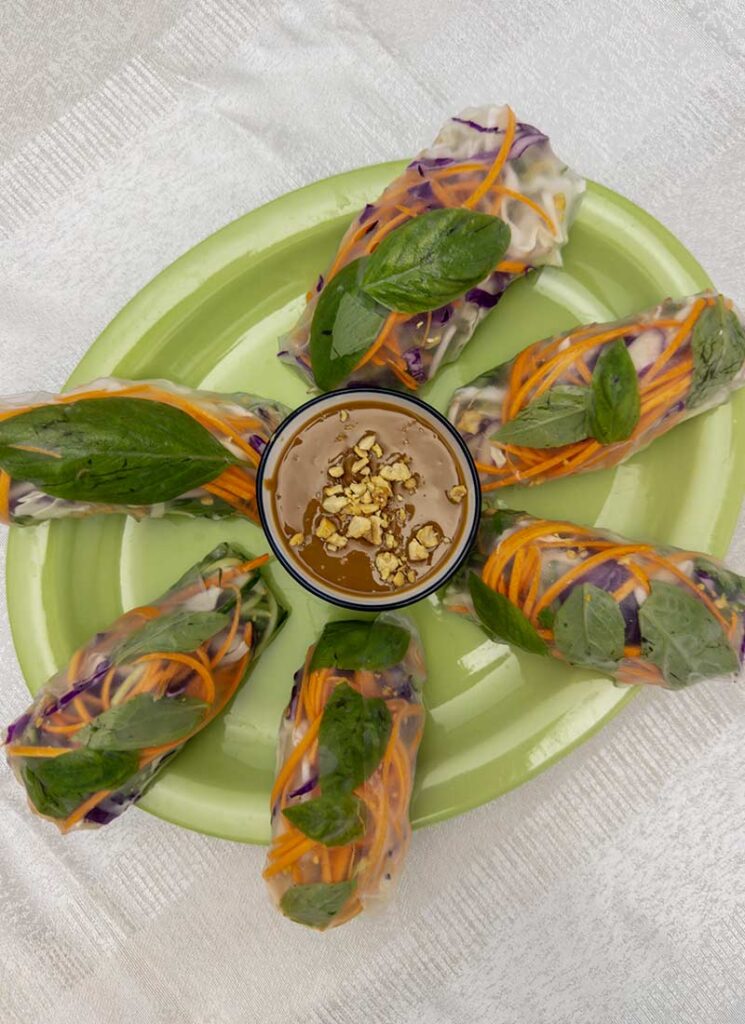
Layer herbs in the front for a pretty “window.”
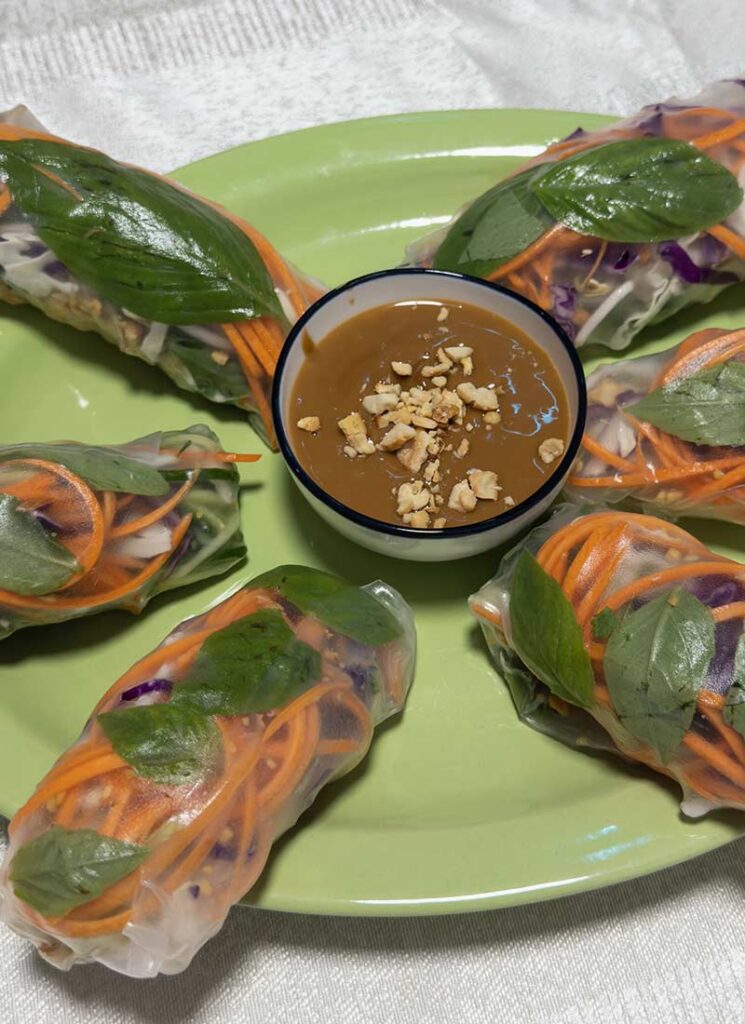
Place mint or basil directly under the wrapper on the visible side for a beautiful, restaurant-style effect.
Cut the rolls in half for a cute presentation.
A gentle sawing motion with a serrated knife keeps the wrapper intact and looks great on a platter.
Final Thoughts
This fresh spring rolls recipe is something I reach for often, whether I’m packing a quick lunch or just want a light appetizer that doesn’t take much effort. It’s flexible enough to match whatever veggies you already have, and once you find your favorite mix of veggies and herbs, it gets even easier to put together. The rolling starts to feel natural after a couple of tries, too. If you make a batch, let me know how yours turned out and which combo you liked best!
Fresh Spring Rolls with Peanut Sauce
Ingredients
For the fresh spring rolls
- 10 to 12 rice paper wrappers
- 1 cup shredded white cabbage
- 1 cup shredded purple cabbage
- 1 medium cucumber julienned
- 2 medium carrots julienned
- 1 cup mung bean sprouts
- ½ cup fresh mint leaves
- ½ cup fresh basil leaves
- ½ cup fresh coriander cilantro
- 6 to 8 lettuce leaves torn into smaller pieces
- ¼ cup chopped peanuts
- 1 cooked chicken breast optional
- 2 to 3 ounces rice vermicelli noodles optional
For the peanut sauce
- ½ cup smooth peanut butter
- 2 tablespoons soy sauce or tamari
- 2 tablespoons brown sugar honey, or maple syrup
- 1 tablespoon rice vinegar or lime juice
- 1 clove garlic finely minced
- ½ to 1 teaspoon Sriracha to taste
- 3 to 6 tablespoons warm water
Instructions
- Prepare the vegetables and herbs. Shred the white and purple cabbage. Julienne the cucumber and carrots. I used a julienne prep peeler to keep everything even and quick. Rinse the mung bean sprouts and pat them dry. Remove the stems from the mint, basil, and coriander. Tear the lettuce into smaller pieces.
- Make the peanut sauce. In a small bowl, whisk together the peanut butter, soy sauce or tamari, sweetener of choice, rice vinegar or lime juice, minced garlic, and Sriracha. Add warm water little by little until the sauce turns smooth and pourable. This simple mix is the perfect peanut sauce recipe for spring rolls.
- Set up your rolling station. Fill a shallow dish with warm water. Place a clean board or plate beside it and arrange all your fillings within reach.
- Soften a wrapper. Dip one rice paper wrapper into the water for a few seconds until softened, then lay it flat on your board.
- Assemble the filling. Start with a piece of lettuce. Add veggies, herbs, sprouts, and peanuts. Add chicken if you’re making a chicken spring rolls recipe. Add vermicelli noodles too if you want a more traditional feel.
- Roll the spring roll. Fold the sides in, then roll from the bottom up, keeping everything snug but gentle so the wrapper doesn’t tear.
- Continue until all wrappers are filled. Serve immediately with your peanut sauce.